ID card exchange at the gate and Thailand's PDPA: is it allowed, and what should site managers change?
 GatePassGoodJobs
No section of Thailand's Personal Data Protection Act B.E. 2562 (2019), the PDPA, bans exchanging an ID card at a housing estate or condominium gate by name. But every time the gate takes a card, writes down its number or photographs it, the site is collecting personal data, so the Act's rules apply: collect only what the purpose needs, tell visitors before or at collection what is collected, why and for how long, have a lawful basis, keep the data secure, and delete it when the retention period ends. Many sites therefore stop holding the physical card and record only what they use, such as the name, the plate and who the visitor is seeing.
This article summarises the Act and documents from the Office of the Personal Data Protection Committee (PDPC) so juristic persons and building teams can see where to start. It is general information, not legal advice for any particular site.
Is ID card exchange a PDPA problem?
The PDPA does not mention ID card exchange directly. What it looks at is how data is collected and looked after, and four points matter at the gate.
- Only what is necessary (section 22): collection is limited to what is necessary for the lawful purpose of whoever collects it.
- Tell people (section 23): before or at collection, state the purpose, what data is collected, how long it is kept, who it may be disclosed to, how to contact the collector, and the data subject's rights.
- A lawful basis (section 24): data may not be collected without consent unless an exception applies, such as being necessary for the legitimate interests of the collector.
- Security and deletion (section 37): keep appropriate security measures, and have a system to erase or destroy data when the retention period ends.
The Act sets administrative fines. Failing to inform under section 23 carries a fine of up to one million baht (section 82). Collecting more than necessary under section 22, collecting without a basis under section 24, or failing the duties in section 37 carries a fine of up to three million baht (section 83). The good news is that all four points can be turned into a routine without giving up visitor checks.
Keeping the card at the gate versus photographing it and handing it back
One ID card carries a lot: the ID number, date of birth, address and a face photo. Most gate work only needs to know who came in, who they are visiting, which car they came in and when they left.
- Keeping the card all day: the gate looks after many people's cards, has to return each one to the right person, and has to be able to explain why holding the card is necessary for the purpose under section 22. Other laws may also be relevant to holding a physical card, so ask the site's legal adviser.
- Photographing the card and handing it straight back: the visitor keeps their card, but the photo is still the whole card as personal data, so it still needs notice, a retention period, limited access and deletion on time.
- Recording only what is used: for example the name, company, plate and who they are visiting. This is closest to collecting only what is necessary, and leaves the least data to look after.
Whichever you choose, avoid guards photographing cards on personal phones or forwarding card photos in chat groups, because the site cannot control where those photos go or when they are deleted.
Do visitors have to sign consent every time?
Not necessarily. The PDPC consent guideline explains that consent is the last lawful basis, used when collection does not fall under another exception in section 24 or section 26. Where consent is used, it must be given freely, must not be a condition for receiving a service, and must be as easy to withdraw as to give.
At a gate where registration is required to get in, a signed consent may not be free in that sense. Site security may instead be considered under another basis, such as legitimate interests under section 24 (5), which means weighing the site's interest against the visitor's rights. Choosing the basis is specific to each site, so have a legal adviser assess it, and whichever basis applies, the section 23 notice is still required.
Who is responsible: the juristic person, the management company or the guards?
The PDPA separates the Data Controller, who decides how data is collected, used or disclosed, from the Data Processor, who acts on the controller's orders or on its behalf (section 6).
A PDPC guideline compiled from consultation answers covers a company hired to manage or run condominiums and housing estates, collecting residents' data for invoices, security and resident registers. The committee's view was that the condominium or housing estate juristic person is the Data Controller, the hired company is a Data Processor, and the controller must put an agreement in place to control the processor's work under section 40.
In practice, the juristic person should decide what the gate collects, how long it is kept and who can see it, and should have a data agreement with the management company or contractor working on its behalf. Whether an outside security company is a processor or something else should be checked by a legal adviser against the actual contract.
Six steps to bring ID card exchange in line with the PDPA
- Write down why you need to know who comes and goes, for example residents' safety and looking back after an incident.
- Pick only the data the purpose needs, such as the name, plate, who they are visiting and entry and exit times, instead of everything on the card.
- Choose the lawful basis that fits the purpose, together with the site's legal adviser.
- Tell visitors before or at collection, for example a sign at the gate with a QR code linking to the full privacy notice.
- Set a retention period and erase or destroy data when it ends, including logbooks, card photos and files on devices.
- Limit who can see the data, have guards use the site's devices instead of personal phones, and sign a data agreement with any company working on your behalf.
What the sign at the gate should say
Section 23 already lists what must be covered, and the PDPC guideline on notices says the notice can be given in several ways, in writing, verbally, or electronically such as a URL or QR code. A short sign at the gate with a QR code to the full notice is one practical way.
- Why the data is collected, and on which lawful basis.
- What data is collected and how long it is kept.
- What happens if the data is not provided, where it is required by law or contract.
- Who the data may be disclosed to, for example the police after an incident.
- How to contact the juristic person, or its data protection officer if there is one.
- The visitor's rights, such as asking to access or delete their own data.
How a system helps the gate stop keeping ID cards
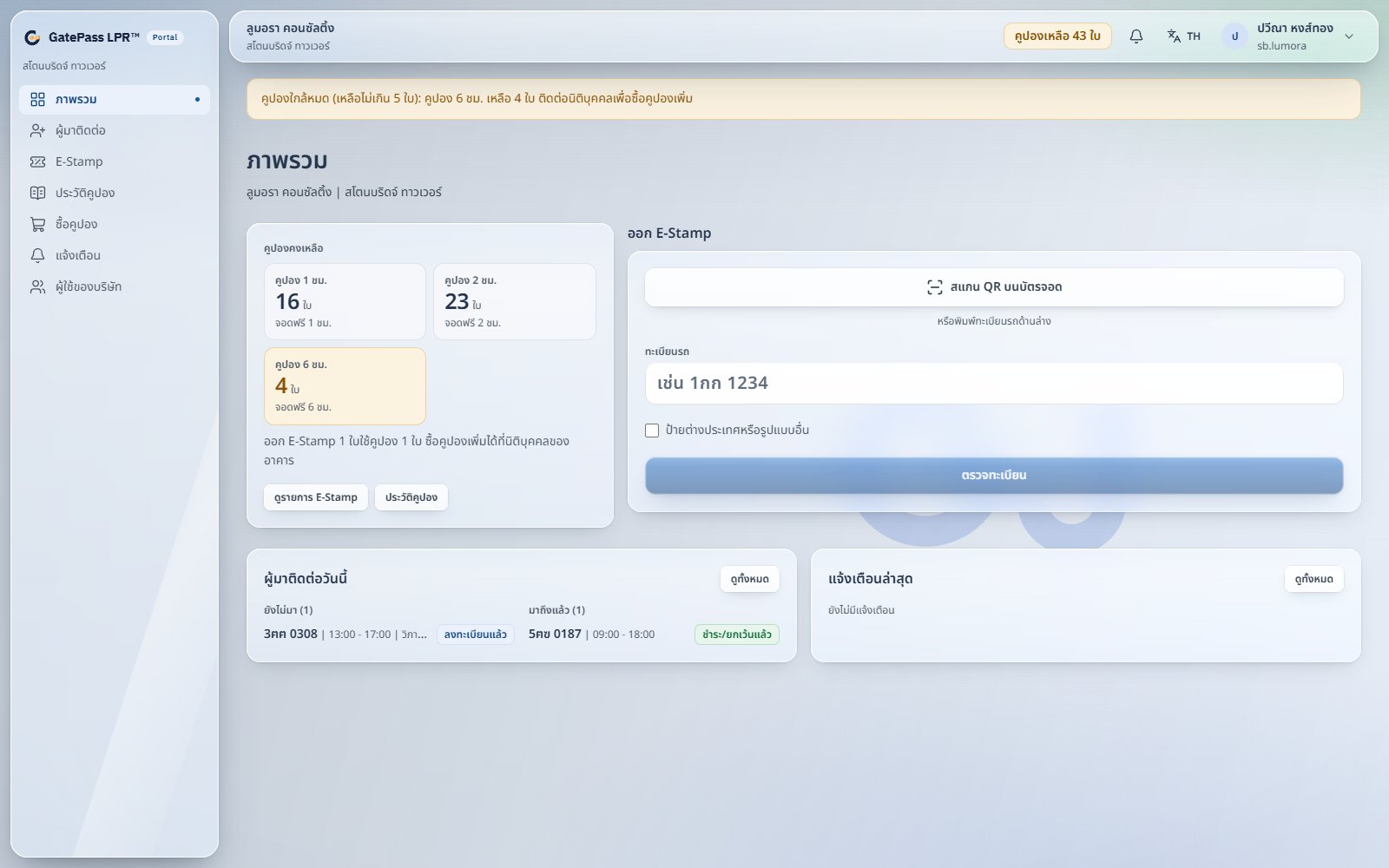
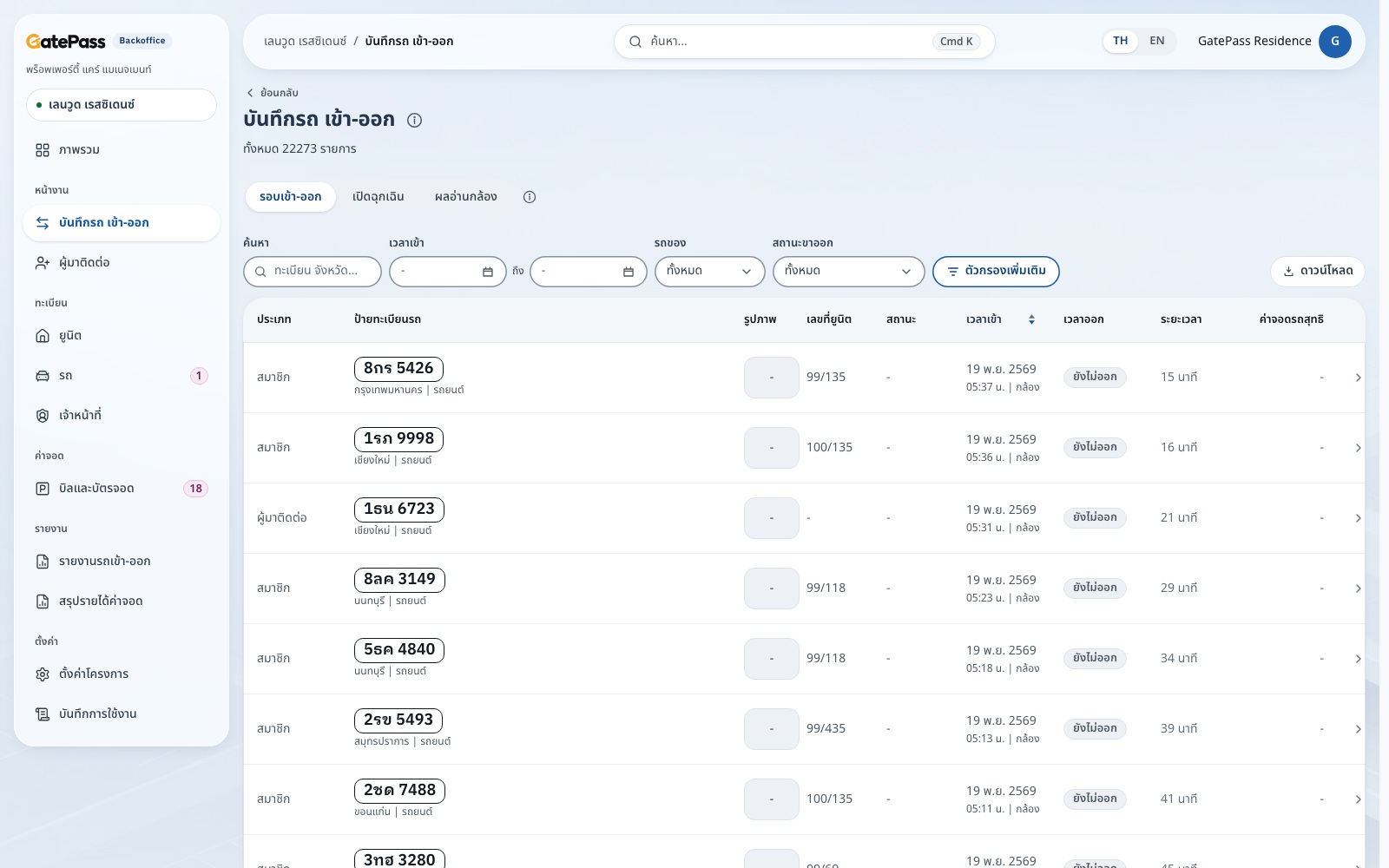
A visitor management system helps with the gate routine itself, so the gate does not take cards and the data sits somewhere the site controls. As an example, here is how our GatePass VMS works.
- Visitors who arrive by car scan a QR code and register on their own phone, with no app to install. They enter their name, company, plate, province and vehicle type and say who they are visiting, without using their ID card.
- Site staff approve in the back office, the visitor sees the result on their phone, and drives in by the plate they registered.
- Where the gate uses a handheld, the guard can register the visitor instead, photographing the ID card and handing it straight back.
- The site chooses how long images are kept, 30, 60 or 90 days, covering card photos, car photos and camera images. When the period ends, the system deletes them.
- Each role can be limited to the parts it needs, and there is a log of who did what and when.
What the system does not do for the site is choose the lawful basis or write the site's privacy notice. The juristic person still prepares that notice and gives it to visitors through its own channels, such as a sign and QR code at the gate.
Checklist for reviewing your site's ID card exchange
- Does the gate still keep physical cards, and if so, can you explain why it is necessary?
- Of the data recorded today, what is never actually used?
- Is there a sign or QR code at the gate, and does it cover everything in section 23?
- Is there a retention period for logbooks and card photos, and who deletes them?
- Do guards photograph cards on the site's device or on personal phones?
- Is there a data agreement with the management company or contractor working on your behalf?
Sources
- Personal Data Protection Act B.E. 2562 (2019), Government Gazette Vol. 136 Chapter 69 Gor, sections 6, 22, 23, 24, 37, 40, 82 and 83, Thai text at https://www.pdpc.or.th/1540/ and unofficial English translation at https://www.pdpc.or.th/1561/
- PDPC guideline on requesting consent from data subjects (in Thai), https://www.pdpc.or.th/1356/
- PDPC guideline on notifying the purpose and details of personal data collection, item 6 (in Thai), https://www.pdpc.or.th/1365/
- PDPC guideline for Data Controllers and Data Processors from consultations on the enforcement of the PDPA, controller and processor part, case 1 (in Thai), https://www.pdpc.or.th/10801/
- PDPC video EP.11 on ID card exchange at housing estate gates under the PDPA (in Thai), in the PDPC Channel at https://www.pdpc.or.th/pdpc-channel/